
How to Publish a Children’s Book: A Step-by-Step Guide
Publishing a children’s book is an exciting journey, but it requires careful planning, creativity, and an understanding of the publishing process. Whether you’re writing a picture book, an early reader, or a middle-grade novel, this guide will walk you through the steps to successfully publish a children’s book.
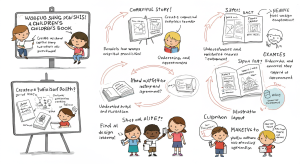
Step 1: Write a Compelling Story
Children’s books are short but require strong storytelling. Follow these key elements:
- Engaging Characters: Kids connect with relatable or whimsical characters.
- Simple & Fun Language: Use age-appropriate vocabulary and sentence structures.
- Strong Message or Theme: Teach a lesson or moral subtly within the story.
- Read-Aloud Appeal: Rhythm, rhyme, and repetition make books more engaging.
Tip: Read successful children’s books to understand pacing, structure, and storytelling techniques.
Step 2: Choose Your Target Age Group
Children’s books are categorized by age. Choose the right category for your story:
- Board Books (Ages 0-3): Short, durable, simple words and images.
- Picture Books (Ages 3-7): 500-1,000 words with illustrations on every page.
- Early Readers (Ages 5-9): Simple chapters, larger text, and illustrations.
- Chapter Books (Ages 7-10): Short chapters, more text, fewer pictures.
- Middle Grade (Ages 8-12): Complex stories, longer books (10,000+ words).
Step 3: Illustrate Your Book
Illustrations are crucial for children’s books. You have three main options:
- Hire an Illustrator: Use platforms like Fiverr, Upwork, or Reedsy.
- DIY Illustrations: Use tools like Procreate or Adobe Illustrator.
- AI or Stock Images: Modify existing art (ensure it fits your book style).
Tip: Picture book illustrations should enhance the story, not just accompany it.
Step 4: Edit and Format Your Book
Editing a children’s book includes:
- Developmental Editing: Refining the story, character development, and pacing.
- Copyediting: Checking grammar, spelling, and readability.
- Proofreading: Final review before publishing.
- Book Layout & Formatting: Use tools like Canva, InDesign, or Vellum for book formatting.
Step 5: Decide on a Publishing Path
You have two main options for publishing:
Traditional Publishing
- Submit your manuscript to children’s book publishers or literary agents.
- Expect a longer process (6-24 months) but higher credibility and reach.
- Recommended publishers: HarperCollins Children’s Books, Scholastic, Penguin Random House Kids.
Self-Publishing
- Faster, more control, and higher royalties.
- Platforms: Amazon KDP, IngramSpark, Draft2Digital.
- Print-on-demand or ebook options available.
Step 6: Publish and Market Your Children’s Book
Self-Publishing Process:
- Upload your book to Amazon KDP, IngramSpark, or another platform.
- Choose print or ebook options.
- Set pricing and royalties.
- Optimize the book listing with keywords and categories.
- Launch and promote your book.
Marketing Strategies:
- Social Media: Share illustrations, behind-the-scenes, and book teasers.
- Book Readings: Schools, libraries, and bookstores.
- Amazon Ads & Facebook Ads: Target parents and teachers.
- Reviews & Influencers: Send ARCs (Advance Reader Copies) for promotion.
Final Thoughts on How to Publish a Children’s Book
Publishing a children’s book takes effort, but with the right approach, you can successfully bring your story to young readers. Decide on your publishing path, invest in quality illustrations, and promote your book effectively.